Click here to listen to this sermon.
“Therefore the kingdom of heaven may be compared to a king who wished to settle accounts with his servants” (Matthew 18:23).
Grace and peace to you from God our Father and the Lord Jesus Christ!
Having just heard Jesus’ words about winning back an erring brother, Peter asks, “Lord, how often will my brother sin against me, and I forgive him? As many as seven times?” Peter thinks he is very generous. After all, the old Jewish teaching was that three times was enough, and even then, you only forgave someone if he or she first apologized. And generally, it was expected that the sinner had to make it up to you somehow.
But Jesus raises the bar much higher: “I do not say to you seven times, but seventy times seven.” Some translations render this as seventy-seven times. Others render it as seventy times seven, or 490 times. Either way, it is a lot. But the number is not meant to be counted. It means keep forgiving. Do not keep score. Do not decide that enough is finally enough. Forgive completely, unconditionally, without limits, and without keeping record.
That’s the kind of love God gives. You see, if God kept such a record of our sins and required us to first make amends, He would have written us off long ago. We need God’s forgiveness over and over every day as long as we live. In the same way, we must forgive each other.
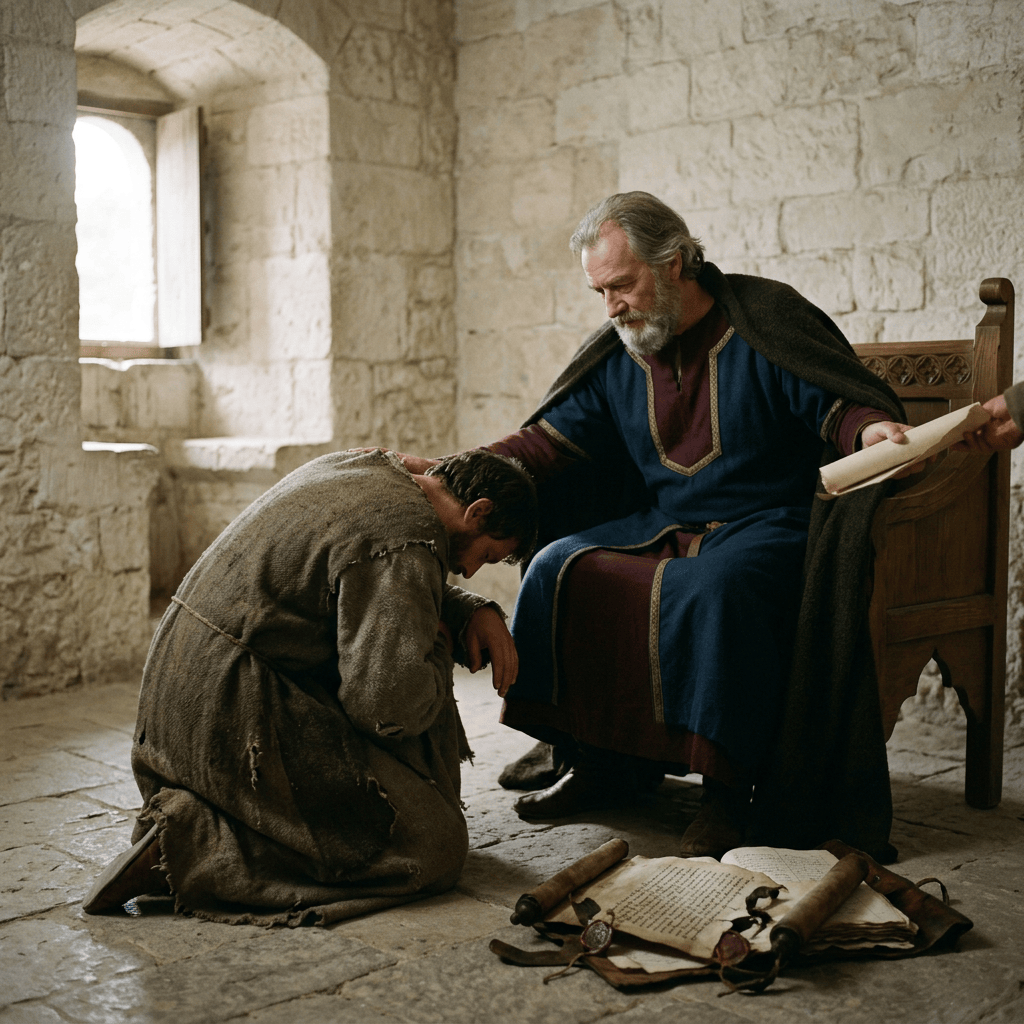
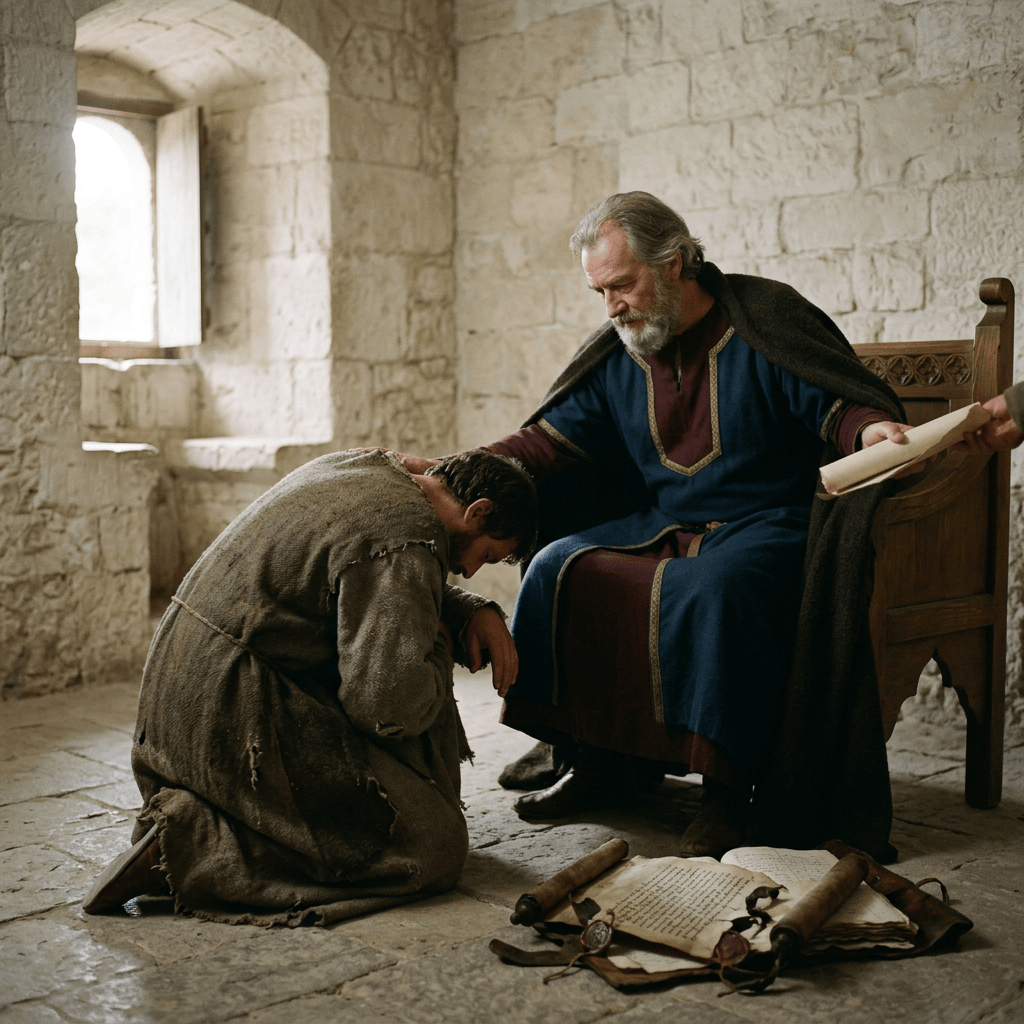
To help us understand forgiving and being forgiven, Jesus tells a parable. A king decides to settle accounts with his servants. The first man called in owes the king a massive debt—ten thousand talents, millions of dollars. The debt is so great that the man could never repay it. So the king orders that everything the man has, including his wife and children, be sold to pay at least a portion of it.
When the servant begs for mercy and promises to repay everything, the king has pity on him, cancels the entire debt, and lets the man go.
How grateful that man should be! But he isn’t. On his way out, he meets a fellow servant who owes him a much smaller debt. A hundred denarii was about three months’ wages for a laborer—nothing compared to the millions he has just had forgiven. We might think he would gladly forgive such a small amount. Instead, he becomes violent. He grabs the man by the throat and demands immediate payment in full. He turns a deaf ear to the man’s plea for mercy and his promise to pay. Then he has him thrown into debtor’s prison to settle accounts.
When the other servants report this to their master, the king immediately calls that ungrateful servant back, angrily scolds him, and has him thrown into debtor’s prison. We may assume that he spends the rest of his life in jail because there is no way he could pay back his huge debt.
Serves him right! He got what he deserved! How dare he be so unforgiving after the great mercy just shown to him! That’s our instinct, isn’t it? But then Jesus turns the parable on us: “So also My heavenly Father will do to every one of you, if you do not forgive your brother from the heart.”
You and I are the ungrateful servant. We are the ones who have been forgiven a great debt. The sins our brother has committed against us are small compared to the countless times we have sinned against God. Yet we often fail to show mercy. We insist that he answer for every wrong ever done to us, while we ourselves have had thousands—perhaps millions—of sins forgiven.
Jesus’ parable hits everyone’s sinful flesh hard. It is a frightening thing to hear Him say, “So also My heavenly Father will do to every one of you, if you do not forgive your brother from your heart.” Who has not been unforgiving at some point? How often do you avoid a church function because you are upset with someone? Or refuse to speak to someone because of what that person did to you? How often, in the heat of an argument, do you drag up some old offense that should have been buried long ago? If God treated you as you treat others, what would become of you? Your debt of sin is so heavy that you would sink into the dark depths of hell, just like the man in the parable.
As you look at the servant with the impossible debt through the lens of the Law, you see yourself. Your debt of sin is that great. You could never settle your account. Any effort or promise to pay that debt is meaningless. Your debt only grows larger, for you could never earn forgiveness as fast as you commit more sins. In fact, you cannot earn forgiveness at all. Your only hope is the mercy of our gracious God. And He has told you that He freely forgives you all your sins for Jesus’ sake. Your account is settled. No sin stands between you and your heavenly Father.
Here the Gospel breaks in with full force. Jesus did not merely cancel your debt; He paid it in full. With His perfect, obedient life and with His innocent suffering and death, Jesus paid for the sins of the world. With His holy precious blood, Jesus paid for every sin ever committed. Through faith, you receive that gift of forgiveness by grace alone. Who are you, then, to demand that your brother make amends before you show mercy?
If you now refuse to forgive someone, you are acting like that unmerciful servant. You are showing by your actions that you do not really believe in mercy, that you think people should be held accountable for all their sins. And God then says to you: “If that is what you believe, then that is the way I will deal with you.”
We recognize the fairness of it all every time we pray the Lord’s Prayer and ask God to “forgive us our trespasses as we forgive those who trespass against us.” We ask God to forgive us in the same way as we forgive others. That means: If we refuse to forgive someone, don’t forgive us either. Treat us as we believe people should be treated.
Does that mean God forgives you when you repent but cancels that forgiveness when you refuse to forgive someone else? That question misses the point. God’s promise in Christ is not uncertain. Rather, an unforgiving heart is unbelief at work. It turns away from the very mercy by which alone we live. Once you set a different standard for yourself, even one new sin is enough to condemn you—and refusing to forgive your brother is already sin.
Satan wants you to believe that you have a right to refuse forgiveness, especially when someone deliberately harms you, especially when the harm is repeated, especially when the offender shows no repentance. But forgiveness does not mean pretending the harm was harmless. It does not mean refusing wise boundaries where they are needed. An unforgiving spirit is spiritual poison. It harms you most of all. It threatens to destroy you utterly and eternally. When you forgive others as God forgives you, you are the one blessed by that. When you refuse to forgive others, you endanger your own faith and salvation.
Forgiveness is not yours to give or withhold as though it began with you. It is God’s gift of mercy and grace. God loved the world so much that He gave His one and only Son, that whoever believes in Him might not perish but have eternal life. Christ paid the debt for all sins, and the Holy Spirit distributes that forgiveness through the means of grace. You are not the source of forgiveness. You are the conduit through which God forgives your brother.
Think of it this way. You are riding along in a truck through a country filled with starving people. The truck is loaded with food donated by a very wealthy man. You did not provide or produce the food. But you have been given it and asked to hand it out to those who are starving. You are not asked to decide whether someone should receive it. You are not asked to decide how much they should receive. You are asked to give these life-saving gifts, even to those too weak and too starved to ask. And you are to give them as much as they need.
Regarding forgiveness, you may ask, “Well, don’t others have to apologize, or at least first ask for forgiveness?” No. Those who are spiritually weak and starving often first need to receive God’s powerful and living Word through you, so that they may be brought back to life. This does not mean repentance is unnecessary or that sin should remain unnamed. It means Christ’s forgiveness is spoken as the very Word that calls sinners to repentance and gives what it commands: the powerful, life-giving Word of Jesus’ forgiveness.
Forgiveness does not belong to you, but has been given to you as a gift of God to pass on to others. Even when another person’s faith is weak, starving, or silent, God has lovingly forgiven you and wants His endless gift of forgiveness to flow through you. Settle accounts! Forgive as you have been forgiven!
But forgiveness in theory is often much easier than forgiveness in practice, isn’t it? Talking about forgiveness is easier than forgiving, especially when a sinful grudge is involved. As you consider how God desires you to forgive, you may feel frustrated. You know you should forgive your brother or sister, but you cannot find it in yourself to do it. You know you should settle accounts, but you cannot. What do you do then? You go to the cross and to the abundant forgiveness Jesus has won there. You draw from the inexhaustible storehouse of His mercy.
Yes, it is often difficult to forgive. Yet the remarkable thing about Jesus is this: He forgives you even for the times you do not perfectly forgive others. God gives you the strength and ability to forgive. You cannot generate forgiveness toward those who have wronged you. But God, in Christ, enables you to do this miraculous act. Like a powerful, cleansing, and healing agent, God’s Word of forgiveness goes to work in your heart. God’s Word prompts and enables you to do what you cannot—or do not want to—do in your own flesh.
Regularly study this parable. Ask God to make His Word and Spirit work in you. God’s forgiveness will not only come to you; it will flow out of you to others. When God’s living Word in Christ comes to you through preaching, teaching, and the Sacraments, that Word enables you to do what you cannot do on your own: forgive those who have wronged you and take away the desire to choke them as the wicked servant did.
How often should you settle accounts? Forgive others as often as necessary, as often as the sins continue or recur, since there is no limit to how often God forgives you. Remember, when you forgive others, you are distributing God’s forgiveness and not your own. Forgiveness is found in Christ’s name and not in yours. Only He can settle accounts. Only He has paid the debt in full.
This really is nothing new. For as long as you have stood in the Lord’s presence and followed the liturgy of His Church—perhaps for as many Sundays as seventy times seven, even seventy-seven years—you have confessed your sins. And you have heard these Gospel words announced by your pastor, as the Lord settled your accounts and marked your debt of sin paid in full: “In the stead and by the command of my Lord Jesus Christ I forgive you all your sins in the Name of the Father and of the Son and of the Holy Spirit.” Amen.
 St. Paul's Lutheran Church, Ferney, SD
Leave a comment